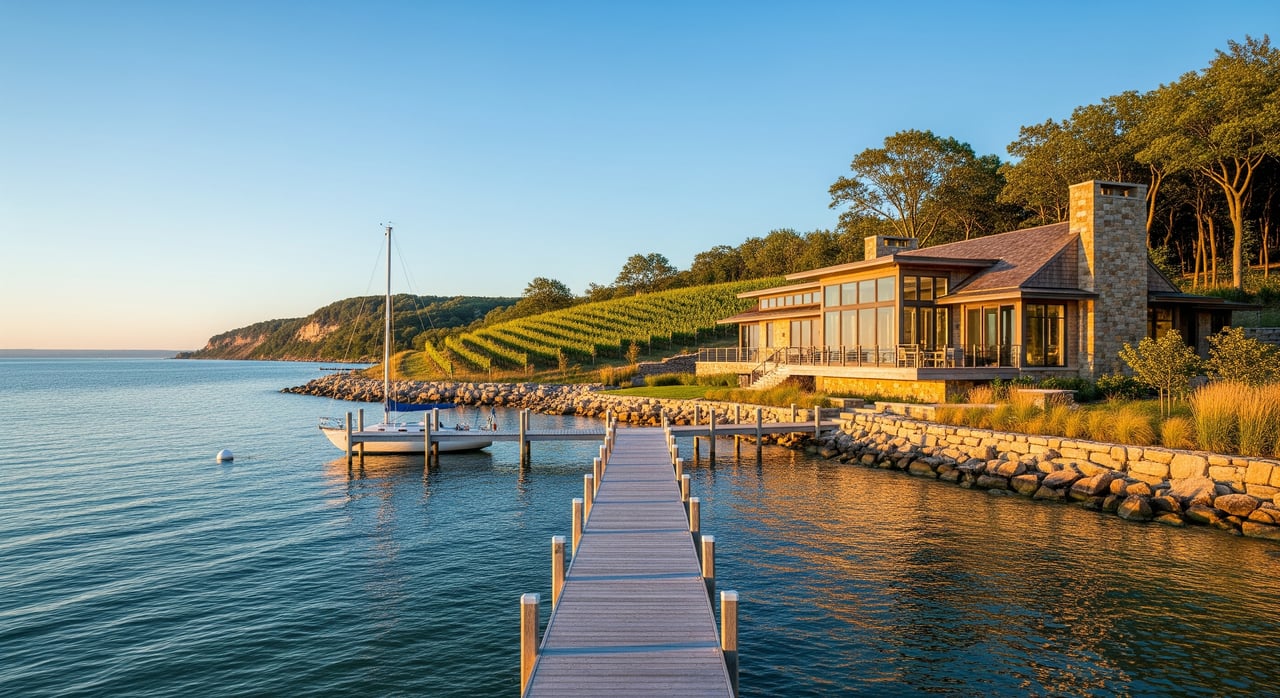
How to Price Old Mission Peninsula Waterfront Homes
What is your shoreline actually worth? On Old Mission Peninsula, two similar-looking properties can trade very differently once you factor in view, frontage, and access. If you are planning to sell or buy waterfront in 49686, you need a pricing plan that reflects how the Peninsula market really works. In this guide, you will learn the value drivers that move price, a step-by-step method to evaluate comps, and what to prepare for a confident pricing consult. Let’s dive in.
Old Mission Peninsula sits between the West and East Arms of Grand Traverse Bay. The shoreline is narrow, private, and varied. You find year-round residences mixed with seasonal homes, vineyards, and agricultural parcels.
Supply is limited. True walk-to-water lots and renovated luxury homes are scarce, so high-quality waterfront tends to be less volatile on price. Demand peaks in spring and summer, driven by second-home owners, retirees, and buyers seeking privacy, views, and boating access close to Traverse City.
Inventory turns slowly. You will rely on older comparable sales and a wider time window than in typical neighborhoods. Recent Great Lakes water-level swings and storms add another layer, since shoreline stability, insurance, and permits can affect buyer confidence.
A premium waterfront price is not about one feature. It is the combined effect of frontage, exposure, privacy, usable shoreline, improvements, and legal status. Here is how each lever works.
More frontage is valuable, but the price per foot is not linear. The marginal value of additional feet declines as frontage grows. Measured frontage at the high-water line can overstate value if the shoreline is steep or not usable.
What to verify:
Orientation changes sun, light, and view quality. West-facing shoreline often has sunset views and looks toward features like Power Island on the West Bay. East-facing shoreline captures morning light and open East Bay vistas. A long, unobstructed view corridor adds a premium.
Angle to the opposite shore, distance to open water, and whether trees block the vista all matter. Expect a strong price impact when the view is wide and uninterrupted.
Privacy is rare on narrow shorelines. Visual buffers, generous lot separation, and topography that screens neighbors add value. Deeded privacy easements and natural buffer strips can lift price because they are hard to replicate.
Topography sets daily usability. A gradual slope to the water supports outdoor living and easy access. A steep bluff limits use and can increase build complexity.
Beach type matters. Sand beaches are preferred for swimming and launching. Rocky or rip-rapped shores can be less desirable for some uses. Count the number of stairs, note any private path or ramp, and look at nearby public access that could either support boating convenience or add seasonal traffic.
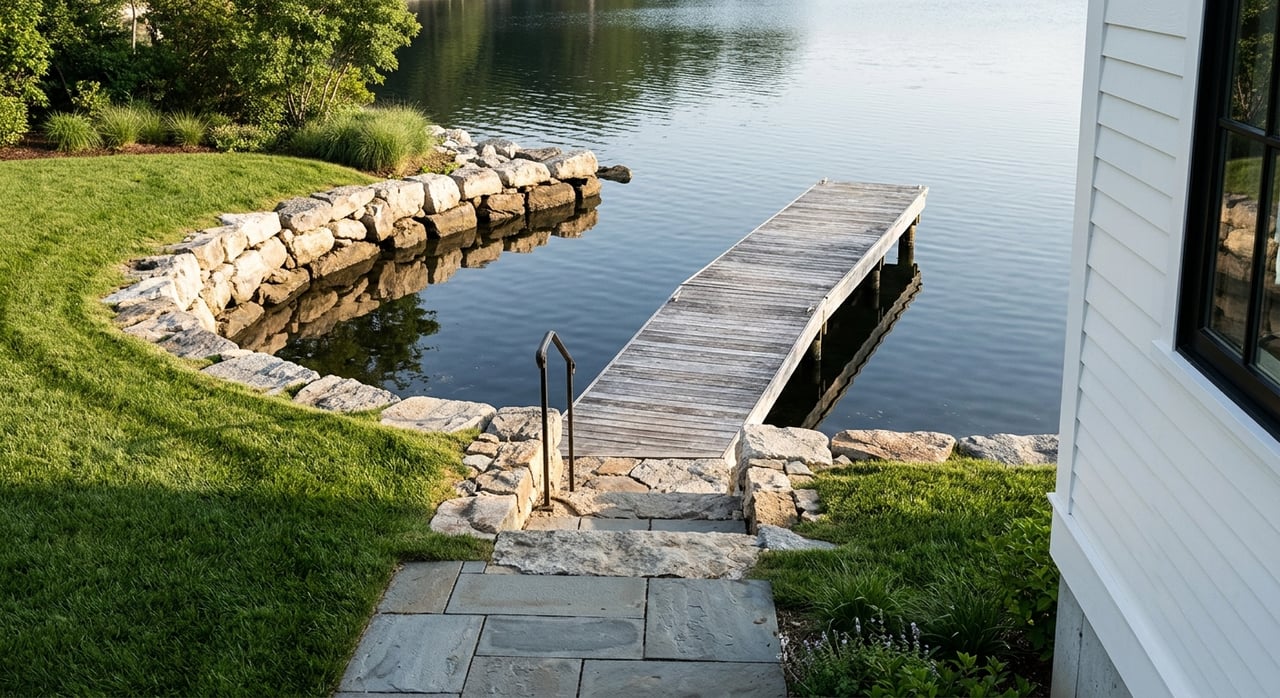
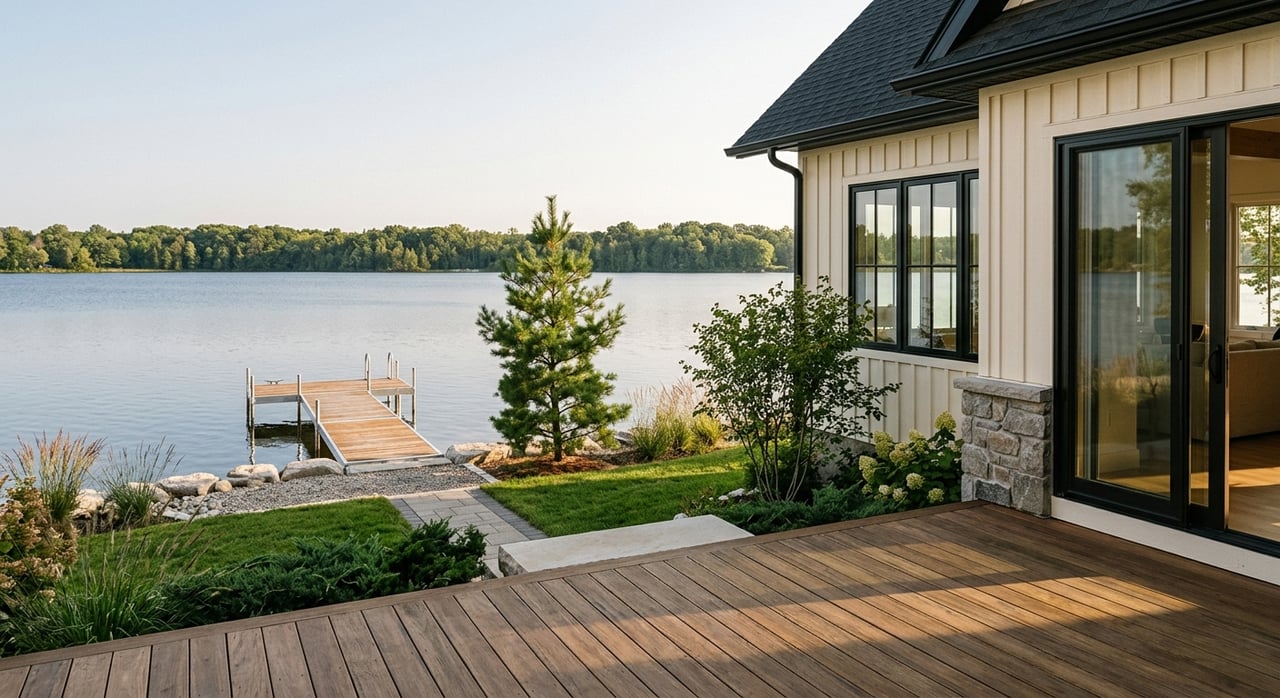
Interior quality sets a baseline similar to inland homes. Size, layout, and finish level matter. Waterfront-specific improvements can swing price more. A private dock, boathouse, engineered beach stairs, seawalls, or piling piers provide utility and often reflect meaningful investment and permitting.
Infrastructure also counts: septic and well that meet county code, driveway and parking for trailers, and garage or boat storage all improve marketability.
Buyers want clarity. Confirm riparian or littoral rights in the deed, the transferability of any pier or dock permits, and approvals for seawalls or shoreline stabilization. Township and county setbacks and zoning affect your ability to expand or redevelop, which changes perceived potential.
Shoreline erosion risk, wetlands, and floodplain exposure affect insurance and lending. Recent high-water periods on the Great Lakes raised awareness. Properties with documented stabilization work and valid permits typically face fewer buyer concerns.
Waterfront sales are infrequent. Exact matches are rare, so expect larger adjustments for exposure, privacy, and shoreline usability than you would make for a typical neighborhood sale. Extend your search window when needed, weighing seasonality and broader market tone.
Use a simple framework that produces a defensible range and a clear story for buyers and appraisers.
Collect and confirm the essentials:
Start local, then expand as needed:
Apply a layered approach instead of a simple per-foot rule. Start with a comp adjusted for interior size and finish. Then add or subtract for frontage, exposure and view quality, site usability, privacy, and special improvements.
Use observed data to anchor differences. For example, compare two recent Peninsula sales where one has 50 more feet of frontage or a superior view corridor, and translate that difference into a dollar or percentage adjustment.
A practical scale to guide magnitude:
Document your rationale and any assumptions, such as estimated cost to replace a dock or seawall or typical permitting timelines.
Translate your findings into a point price and a tiered range:
State your confidence level based on comp quality, shoreline stability, permits, and septic status. For luxury waterfront, explain that low trade frequency widens the range because buyer pool composition can shift outcomes.
Bring clear, verifiable records to speed up analysis and build buyer confidence later.
During the consult, be ready to answer:
Appraisers lean on local MLS data and need documentation for unique waterfront features. Provide photos, site plans, permits, and invoices that support premium adjustments. Some lenders add insurance or underwriting requirements for waterfront or bluff lots. Clarify floodplain status and stabilization history early to avoid delays.
Insurance and risk questions often focus on erosion, shoreline protection, and replacement cost for improvements like docks or stairs. Organized records can reduce friction and strengthen buyer trust.
If you want a clear, data-backed price for your Old Mission waterfront, bring the records above and we will build a custom range that reflects frontage, exposure, and usability. Our team blends local knowledge of 49686 with premium marketing to position your property for the right buyers at the right time.
Ready to start? Connect with Live Traverse City for a private pricing consult and Get Your Free Home Valuation.
Stay up to date on the latest real estate trends.
Take back your time. Allow the Live Traverse City Real Estate Team to assist you with your property needs. Whether you're buying, selling, or investing, our team will simplify the process and maximize your time.